
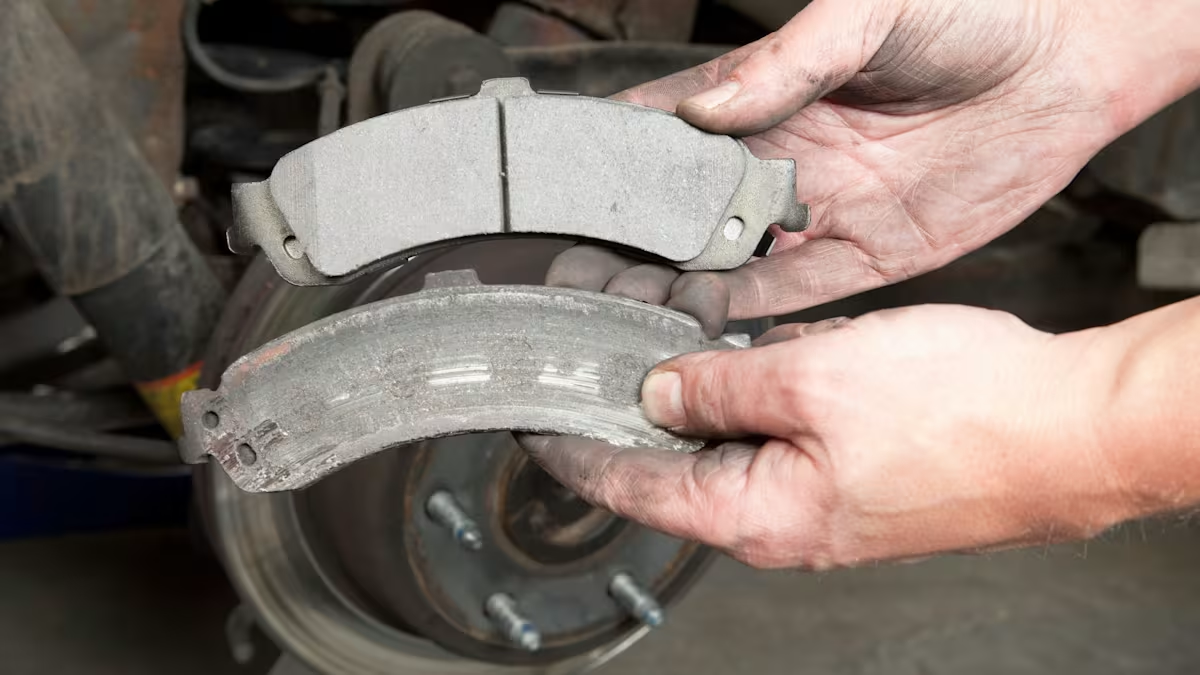
How Much Are Brake Pads?
Drivers can expect to pay $300 to $600 to replace the brake pads on their vehicle or about $150 to $300 per axle.
Prices for brake pads vary wildly depending on what kind of vehicle you have, the type of brake pads your vehicle or driving style requires, and labor rates in your area. The cost breakdown of parts to labor is approximately 50/50.
How Long Do Brake Pads Last?
Brake pads can last anywhere from 30,000 to 80,000 miles.
How long your car’s brake pads last depends on a few factors: your driving style, the type of brake pads your car currently has, the condition of other braking components, and the weather in your area.
Having heavily warped rotors can cause your brake pads to wear faster, while organic brake pads will wear out quicker than ceramic and semi-metallic brake pads. Stop-and-go traffic, slamming on the brakes often and regularly towing heavy loads can cause brake pads to wear quickly.
Drivers should have their brakes inspected every 20,000 to 30,000 miles or every other year.
Can You Replace Your Brake Pads Yourself?
While YouTube, forums, manuals, and the internet can help you change your car’s brake pads, most people shouldn’t attempt to change them.
Brake pads can be tricky to replace, and doing something wrong can result in poor or zero braking performance. There are a few steps that are easy to skip, too, like replacing the brake’s retaining clips, retracting the pistons in the brake caliper, or putting the brake pads in the correct position. Some vehicles also require new brake wear sensors when the pads are replaced, which adds another dimension to the job. Inspecting your car’s brake rotors and calipers when replacing your car’s brake pads is also worth the effort while the car’s tires are off.
Car owners who have some experience working on their vehicle, understand the basics of how car brakes work, and have access to the right tools can easily replace brake pads within a few hours.
Symptoms of Worn Brake Pads
There are a few symptoms to look for when trying to tell if it’s time to upgrade your car’s brake pads.
Unusual Noises
The most obvious sign of old brake pads is a high-pitched squeal when you apply the brakes. Most brake pads have squealer tabs that are built into the brake pads that touch the rotor when they wear down. The squealer tabs create a high-pitched squeal or a grinding noise, signaling it’s time to replace the components.
Rough Brake Pedal Feel
If you push your brake pedal and feel like the action is rougher than usual, almost like you’re stepping on gravel or sand, your brand pads could be worn down and need to be examined.
Grooves In Your Brake Rotor
On most cars, you don’t have to remove your car’s tires and wheels to see your brake pads, but if they’re obscured and hard to spot, take a look at your brake rotors. Seeing or feeling a groove on the rotor is an indication of worn-out brake pads.
Pulsing Brake Pedal
Pushing your car’s brake pedal should result in a smooth, continuous action. If you push your car’s brake pedal and notice that it’s pulsing, like the brake pedal is rapidly pushing back at your foot, it’s time to check your brake pads for wear.
Car Veers To The Left Or Right
Your vehicle should be able to stay in a straight line when the brakes are pressed. If you notice your car is pulling to one side (left or right) when you depress the brakes, it’s a sign of brake pads that are wearing unevenly.
How to Check Brake Pads
On most cars, you should be able to check your brake pads without removing the tire. You’ll have to line up your wheel to provide you with a small window to peek through at your brake pads. Once you have a view of your brake pads, you’ll want to look at the thickness of the pad.
A visual inspection through your wheels is fine if you don’t have the necessary tools or know-how to remove your brake pads, but ideally, you’ll want to remove your wheels and inspect each brake pad individually. When inspecting your car’s brake pads, you’ll want to look for even wear across both pads, cracks, the thickness of the brake pad, and the condition of the wear indicator slot in the brake pad.
What Are Brake Pads?
Brake pads are an integral part of your car’s braking system and, with some help from other components, including brake rotors, calipers, brake lines, and a master cylinder, bring your car to a stop. When you push your car’s brake pedal, pressurized brake fluid from the master cylinder flows through the brake lines and into a caliper that’s located at each wheel. The brake fluid causes the brake pads to clamp down on a spinning rotor. The friction from the brake pads against the rotor causes your vehicle to slow down. Over time, this friction causes brake pads to wear down.
What Are Brake Pads Made Of?
Modern brake pads have come a long way since they were introduced as a replacement for drum brakes. There are three main types of brake pads on the market: organic, ceramic, and metallic. While asbestos was used to create early versions of brake pads, the auto industry moved to organic brake pads as a safer alternative.
Organic
Organic brake pads are found on the majority of new vehicles in the United States and are made from a combination of Kevlar, fiberglass, glass, carbon compounds, rubber, and resin. While organic brake pads are a good option for daily drivers, they wear out quicker compared to other types of brake pads and are prone to overheating during hard braking and extreme weather.
Ceramic
Ceramic brake pads are the newest type of brake pad available. As the name implies, ceramic brake pads are made out of ceramic that is infused with copper wires, helping increase heat conductivity and friction. Compared to organic brake pads, ceramic brake pads are quieter, produce less dust, and have a broader operating temperature range. Ceramic brakes, though, are much pricier than organic brake pads and generate more heat that will be passed on to other braking components, increasing wear and tear.
Metallic
Metallic brake pads are typically used for extreme braking requirements, like car racing or trucking, where drivers need a consistent brake pedal feel and brake pads that dissipate heat effectively. Semi-metallic brake pads consist of between 30% and 70% metal, which can include steel, copper, iron, and other composite alloys. These metals are joined with fillers and graphite lubricant to create the brake pad. Drivers seeking maximum performance from their brake pads will want to explore semi-metallic options, which can withstand heat better than other options and provide better braking performance. Semi-metallic brakes, though, are noisier, place more wear and tear on brake rotors, and produce more brake dust than the other two types of brake pads.

Do You Need to Replace Your Rotors Too?
Depending on what shop or dealership you take your vehicle to, they may insist on changing your car’s brake rotors at the same time they replace the brake pads as a safety precaution. It certainly won’t hurt to change your car’s brake rotors at the same time as your brakes, but it’s often not necessary.
Your car’s brake pads will wear out much quicker than the rotors, which usually last between 30,000 to 70,000 miles. The durability of rotors means that owners may have to change them on every other brake pad replacement.
However, ignoring your car’s brake pads can result in grooved or uneven rotors that will need to be replaced. If you change your car’s brake pads, you typically don’t need to change your car’s brake rotors every time you replace your car’s brake pads. Additionally, if you’re on a tight budget, you can get your car’s rotors resurfaced or “turned” on a brake lathe at a professional shop as a cost-saving measure instead of getting them replaced.
Next Steps
Track your car's maintenance with Carfax Car Care
Check out new and used cars for sale


